
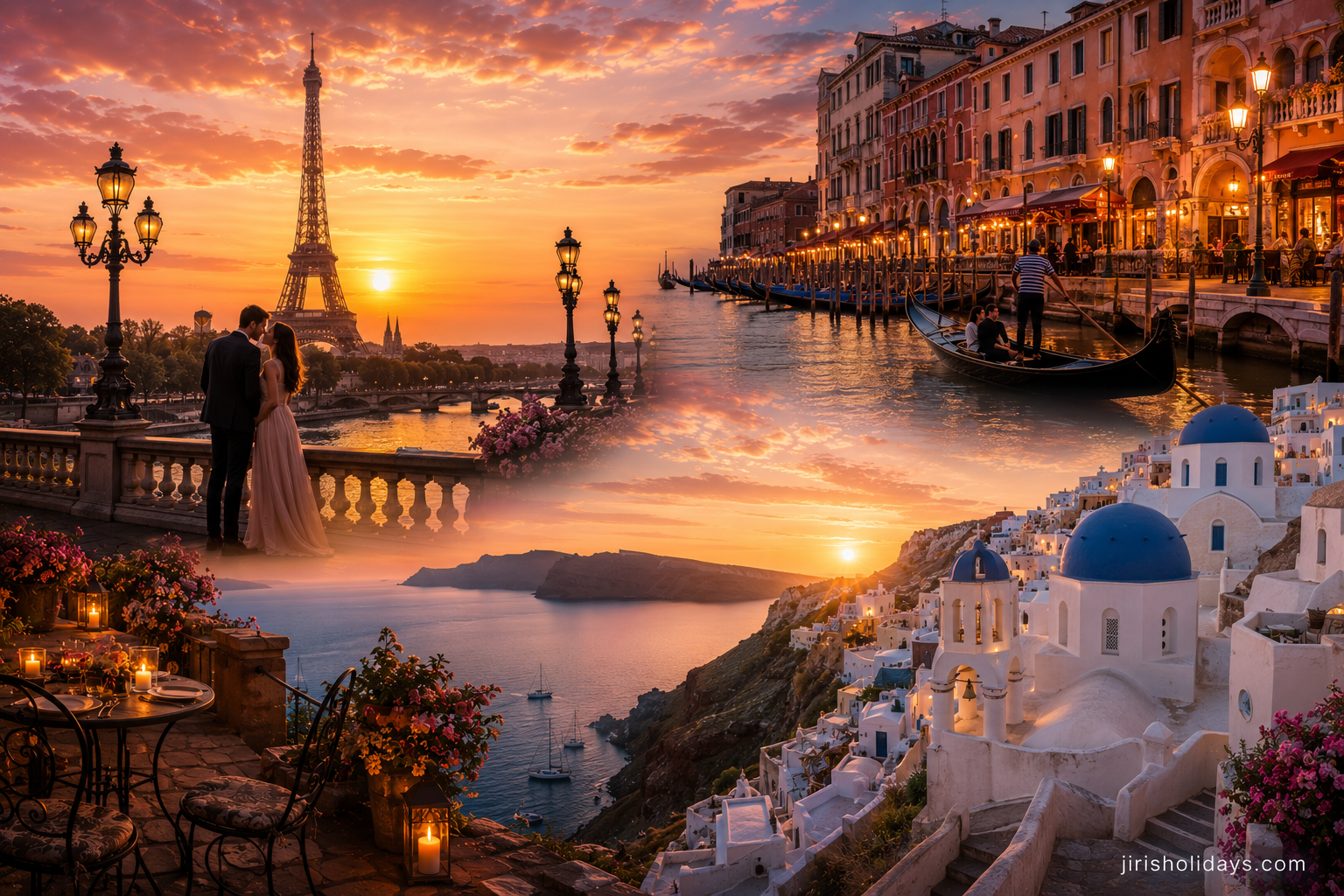
The most romantic places in Europe share certain traits without copying each other. Light matters—whether Aegean glare on whitewashed walls or soft northern glow on canal water. Scale matters too; intimacy often lives in pedestrian lanes where cars cannot intrude. Food and ritual complete the picture: shared plates, late seating, wine tied to local soil. This list avoids ranking love itself and instead highlights destinations where couples consistently find space to connect—on ferries, terrace tables, coastal paths, or museum benches between masterpieces. Some entries suit honeymoon splurge; others work for long weekends from London, Paris, or Berlin by rail. Seasonal honesty runs through each section because romance in August crowds differs from February fireplace quiet. Use the comparison table to match mood—seaside, alpine, urban, or vineyard—and stitch the itinerary suggestions into rail passes or short flights. Europe rewards slow travel; these places especially punish rushed checklist tourism.
Top Destinations Worth Your Time
Venice, Italy
Venice resists cynicism when you leave San Marco after dusk and wander Cannaregio canals where laundry hangs above green water and locals drink spritz at neighborhood bars. Gondolas cost dearly; romance often lives cheaper on vaporetto line 1 at sunset or on foot bridges without tour groups. Book accommodation on quieter sestieri—Dorsoduro or Cannaregio—to avoid suitcase gridlock near Rialto.
Acqua alta flooding can soak ground floors November to January; pack boots and patience. Carnival masks and February fog create cinematic atmosphere with fewer summer cruise crowds. Reserve restaurants with canal views at least two weeks ahead for summer weekends.
Art collections at Accademia and Peggy Guggenheim pair well with slow afternoons. Day trips to Burano lace island or Torcello cathedral add color without overnight moves. Tipping gondoliers is customary though rates are fixed by city regulation—confirm duration before boarding.
Highlights:
- Canal-side walks away from San Marco crowds
- Sunset vaporetto rides on Grand Canal
- Dorsoduro art museums and wine bars
- Burano and Torcello lagoon day trips
Practical note: Train to Santa Lucia station; city tax and rolling luggage fees apply; no cars on islands.
Santorini, Greece
Santorini's caldera edge villages—Oia, Imerovigli, Fira—stack white cubic houses above sunken volcano rim with sunsets that draw daily applause from terrace crowds. Book cave hotels with plunge pools early for honeymoon season May through September. Morning hours before cruise ships arrive suit photography and swimming at Red Beach or volcanic hot springs boat tours.
Wine estates on interior volcanic soil produce assyrtiko whites worth afternoon tasting away from caldera prices. Akrotiri archaeological site preserves Minoan-era ruins beneath bioclimatic roof—history lesson before evening dinner. Shoulder months April and October reduce rates and heat while keeping tavernas open.
Cliff paths between villages offer exercise and views but expose walkers to sun—carry water. Donkeys still climb old Fira port steps though cable car alternative exists. Ferries connect to less crowded Cyclades islands if Santorini feels busy mid-August.
Highlights:
- Caldera sunset terraces in Oia
- Cave hotels with infinity plunge pools
- Volcanic wine tasting estates
- Akrotiri Bronze Age excavation site
Practical note: Fly or ferry from Athens; rent ATV cautiously on steep roads; book sunset dinner tables weeks ahead.
Paris, France
Paris earns romance through ritual: picnic wine on Canal Saint-Martin, late Louvre hours on Friday, jazz in caveau cellars of Saint-Germain. Eiffel Tower sparkle hourly after dark feels touristy yet still works for proposals with advance planning. Neighborhood bakeries and market streets—Rue Cler, Marché des Enfants Rouges—ground glamour in daily pleasure.
Spring April blossoms and autumn September light photograph kindly. Summer terraces stay open late; winter offers museum depth and opera season. Avoid locking love to single monuments; instead book one splurge meal—maybe Septime or a classic bistro—and balance with free riverside walks.
Metro and Vélib bikes cover distances efficiently. River Seine bookstalls and Pont des Arts replacement footbridges invite slow crossing. Day trips to Versailles or Giverny suit garden lovers without leaving Paris base.
Highlights:
- Seine riverbank evening strolls
- Canal Saint-Martin picnic culture
- Museum late openings and jazz cellars
- Classic bistros and pâtisserie counters
Practical note: Central arrondissements 4–7 walkable; reserve top restaurants weeks ahead; Metro passes save taxi stress.
Amalfi Coast, Italy
The Amalfi Coast threads pastel towns—Positano, Ravello, Amalfi—along vertical cliffs where lemon terraces scent the air and staircases substitute for streets. Ravello's Villa Cimbrone and Villa Rufolo gardens frame Tyrrhenian Sea panoramas favored for wedding photography. Coastal buses twist dramatically; motion-sensitive travelers should sit aisle and forward.
Boat days explore hidden coves and Emerald Grotto near Conca dei Marini. Path of the Gods hike from Bomerano to Nocelle delivers high views without road noise. Peak July and August traffic chokes Positano access—May and early June or late September improve calm.
Limoncello tastings and seafood spaghetti alle vongole anchor culinary romance. Parking scarce; public SITA buses or private drivers reduce stress. Minimum three nights recommended—two feels rushed with jet lag.
Highlights:
- Positano cliffside beach and boutiques
- Ravello garden villas and concerts
- Path of the Gods coastal hike
- Boat trips to grottoes and coves
Practical note: Salerno or Naples train connection; SITA bus or ferry between towns; book hotels with luggage porterage.
Prague, Czech Republic
Prague layers Gothic spires, Baroque facades, and Art Nouveau cafés along Vltava River bends. Charles Bridge at sunrise—before souvenir stalls fully open—remains genuinely moving. Lesser Town stairways climb to Prague Castle complex where golden hour light warms stone walls.
Classical concerts in churches cost less than Western European capitals yet feature skilled musicians. Beer hall culture in cellars like U Flek? contrasts with intimate wine bars in Vinohrady district away from old town crowds. December markets mulled wine scents add winter charm though tourists pack squares.
Affordable luxury hotels occupy restored palaces. River cruises vary in quality—choose smaller boats over loud disco vessels. Pet?ín Hill funicular and rose gardens offer quiet afternoon escape.
Highlights:
- Charles Bridge dawn and evening lights
- Prague Castle and St. Vitus Cathedral
- Jazz clubs and riverside classical concerts
- Art Nouveau cafés and Vinohrady wine bars
Practical note: Walkable historic core; trams cover hills; exchange money at banks not street kiosks.
Hallstatt, Austria
Hallstatt village pins gingerbread houses between alpine lake and salt mountain slopes, reflecting perfectly on calm mornings before tour buses arrive from Salzburg. Salt mine tours include underground slides and prehistoric burial history—UNESCO recognition covers broader region beyond postcard pier.
Stay overnight when day-trippers leave and lakeside lights shimmer. Hike to Five Fingers viewing platform on Dachstein massif for dramatic valley perspectives. Winter transforms scene with snow and Advent markets; summer allows swimming in designated lake zones.
Parking restricted at village entrance—guests with hotel bookings receive vehicle permits. China built a replica village so expect photography crowds midday. Respect residents by keeping voices low in narrow alleys.
Highlights:
- Mirror-still lake reflections at dawn
- Historic salt mine underground tour
- Dachstein Five Fingers viewpoint hike
- Alpine winter and Christmas atmosphere
Practical note: Train/bus from Salzburg 1.5 hours; overnight stay strongly recommended; parking permit via hotel.
Bruges, Belgium
Bruges medieval core encircles canals nicknamed "Venice of the North" with lace shops, chocolate ateliers, and horse-drawn carriages clip-clopping cobbles. Climb Belfry tower for rooftop maze views if stair fitness allows. Evening canal cruises narrate history while lights ripple on water.
Beer tasting ranges from Trappist abbeys day trips to cellar bars serving lambic and kriek cherry brews. Michelangelo Madonna statue hides in Onze-Lieve-Vrouwekerk church. Winter absence of crowds rewards fireplace hotel rooms and stoofvlees beef stew dinners.
Day trippers from Brussels flood weekends—book midweek stays. Bicycle routes reach Damme windmills and polder countryside within hour. Respect canal residents—noise carries across water at night.
Highlights:
- Canal cruises and illuminated evenings
- Medieval Belfry and market square
- Belgian chocolate and beer culture
- Quiet winter fireplace season
Practical note: Train from Brussels 1 hour; compact walkable center; reserve Belfry time slots online.
Provence, France
Provence romance blooms in lavender rows mid-June through July on Plateau de Valensole and Sénanque Abbey surroundings near Gordes. Hill towns—Gordes, Roussillon, Les Baux-de-Provence—glow ochre and limestone above vineyards. Market mornings in Aix-en-Provence and L'Isle-sur-la-Sorgue sell olives, tapenade, and sun-warmed peaches.
Van Gogh trail in Arles and Saint-Rémy connects art history with landscape that still matches his brushstrokes. Cassis calanques offer turquoise swimming coves reached by boat from harbor town east of Marseille. Rent car for flexibility; public transport sparse outside Avignon TGV hub.
Rosé wine dominates summer tables—visit Bandol or Luberon estates for tastings. Mistral wind can whip afternoons—secure terrace hats. Book countryside bastide hotels with pools for afternoon retreat from heat.
Highlights:
- Lavender fields June and July bloom
- Hilltop villages and ochre cliffs
- Cassis calanques boat swimming
- Rosé wine estates and provençal markets
Practical note: TGV to Avignon or Aix; car rental recommended; reserve lavender season hotels early.
Lake Bled, Slovenia
Lake Bled island church and cliff-top castle frame emerald water in Julian Alps foothills—a compact scene that feels storybook without excessive travel logistics. Pletna wooden boats row passengers to island where bell ringing tradition grants wishes. Castle museum and wine tasting overlook lake from precipice.
Vintgar Gorge boardwalk threads turquoise Radovna River canyon a short drive north. Less crowded than Alpine peers in Switzerland yet increasingly popular—arrive before 9 a.m. for peaceful circumnavigation walk or rental rowboat.
Ljubljana city lies one hour south for combined city-lake itinerary. Winter ice and snow quiet trails; summer swimming at Grajsko kopališ?e beach. Local cream cake kremšnita is mandatory shared dessert.
Highlights:
- Island church and wishing bell tradition
- Bled Castle cliff panorama
- Vintgar Gorge turquoise walkway
- Lake circuit walk or rowboat hire
Practical note: Bus or car from Ljubljana; seasonal pletna boat schedule; parking fills at castle lot.
Sintra, Portugal
Sintra hills outside Lisbon stack Romantic-era palaces—Pena's riotous colors, Monserrate's botanical gardens, Quinta da Regaleira's initiation wells—inside misty Atlantic forest. Moorish Castle walls weave through boulders with views to ocean. Day trips cram too much; overnight in historic center town allows morning palace entries before Lisbon tour buses.
Tascas serve travesseiros almond pastries and cozido stews. Microclimate brings frequent fog—pack layers even in summer. Ubers and tuk-tuks navigate narrow bends; official park buses link main sights.
Combine with Cascais coastal walk or Cabo da Roca westernmost Europe cliff for Atlantic drama. Advance timed tickets essential for Pena Palace peak season.
Highlights:
- Pena Palace colorful Romantic architecture
- Quinta da Regaleira mystical gardens
- Moorish Castle rampart views
- Misty forest microclimate atmosphere
Practical note: Train from Lisbon Rossio 40 minutes; timed palace tickets online; stay overnight for calm mornings.
Norwegian Fjords (Geiranger & Flåm)
Norwegian fjords carve sheer walls from sea to sky where waterfalls free-fall without intermediate shelves. Geirangerfjord UNESCO stretch reveals Seven Sisters falls opposite Suitor cascade folklore. Flåm Railway climbs from fjord village through alpine meadows to Myrdal junction—one of steepest standard gauge lines globally.
Cruise ships pack Geiranger July afternoons; independent travelers rent cars on Hellesylt-Geiranger ferry for windshield views. Kayak rentals in Flåm offer intimate water perspective when weather cooperates. Wool layers mandatory—sun and chill alternate within hours.
Combine Bergen to Oslo rail nail-biter segments across Hardangervidda plateau. Winter fjords suit aurora chasers inland; summer midnight sun extends hiking hours. Budget accordingly—Norway ranks among Europe's priciest destinations.
Highlights:
- Geirangerfjord waterfall viewpoints
- Flåm Railway scenic ascent
- Fjord ferry and kayak perspectives
- Bergen–Oslo rail mountain crossing
Practical note: Fly into Ålesund or Bergen; book Flåm Railway and ferries ahead; driving seasonal on some passes.
Choosing the Right Season for a Romantic Europe Trip
Season shapes romance as much as destination. Spring April through June delivers blossoms in Paris and Provence without August heat crushing Amalfi staircases. September light softens Venice canals when cruise volume drops slightly. Winter rewards Bruges and Prague with fireplaces and Christmas markets, though daylight ends early—plan museum afternoons and long dinners. Norwegian fjords shine June through August when mountain passes stay open; winter suits aurora hunters willing to trade green valleys for polar night skies. Book shoulder-season hotels and you often receive room upgrades when occupancy thins. Pack layers rather than one heavy coat; Mediterranean evenings cool even when afternoons blaze.
- Spring: Paris, Provence lavender prep, Venice before summer cruises
- Summer: Norwegian fjords, Amalfi swimming, Santorini sunsets (book early)
- Autumn: Prague, Hallstatt foliage, wine harvest in Provence
- Winter: Bruges markets, Prague concerts, fireplace hotels in Alps
Budgeting for Couples Without Skimping on Moments
Romantic Europe does not require five-star every night. Alternate splurge dinners with market picnics—wine, cheese, and baguette beside the Seine costs a fraction of bistro tabs yet feels intimate. Train advance fares beat last-minute flights on many corridors. City tourism cards pay off only if you cluster museums; otherwise pay single entries. Shoulder-season hotel promotions in Venice and Santorini can halve rates. Free experiences—fjord viewpoints, canal walks, beach sunsets—anchor trips while one timed splurge like a Ravello concert ticket supplies the memory anchor.
Quick Comparison: Where to Go First
Use this table to match your travel style with the right stop on your route. Priorities differ—some travelers want beaches, others want cities or mountain air.
| Destination | Best For | Typical Stay | Peak Season |
|---|---|---|---|
| Venice | Canals and art | 2–3 nights | Apr–Jun, Sep–Oct |
| Santorini | Caldera sunsets | 3–4 nights | May, Sep–Oct |
| Paris | Urban culture | 4–5 nights | Apr–Jun, Sep |
| Amalfi Coast | Cliff towns and sea | 3–4 nights | May–Jun, Sep |
| Prague | Architecture value | 2–3 nights | May, Sep, Dec |
| Hallstatt | Alpine lake calm | 1–2 nights | May–Sep, Dec |
| Provence | Lavender and wine | 4–5 nights | Jun–Jul lavender |
| Norwegian Fjords | Epic nature | 3–5 nights | Jun–Aug |
Suggested Itinerary Ideas
This fourteen-day rail-and-flight route links central European cities with one Mediterranean splurge segment. Reverse direction or substitute Prague for Vienna easily.
- Days 1–3 – Paris: Arrive CDG, Seine walks, museum day, Montmartre evening, splurge bistro reservation.
- Days 4–5 – Bruges: Thalys or train to Brussels connection, canal cruise, chocolate tour, quiet square dinners.
- Days 6–7 – Prague: Flight or train east, castle morning, jazz night, Lesser Town café hours.
- Days 8–9 – Hallstatt: Train via Salzburg, overnight lake reflections, salt mine and morning hike.
- Days 10–12 – Amalfi: Fly Naples or train, base Positano or Ravello, Path of Gods and boat day.
- Days 13–14 – Rome buffer: Optional Fiumicino fly-out via Rome for second Italy taste or direct Naples departure.
Planning Tips Before You Book
Romantic Europe trips succeed when logistics stay invisible. Book central hotels even if square meters shrink—late walks home matter more than breakfast buffets far from centers. Restaurant reservations at sought tables need two to four weeks in summer; some Michelin spots require months. Travel insurance covering trip interruption protects costly island hops. Discuss budget openly: Norway and Amalfi strain wallets faster than Prague or Slovenia. Pack one dress-up outfit for fine dining plus comfortable shoes for cobblestones that defeat heels. Consider shoulder seasons for Venice and Santorini when prices and heat drop while businesses remain open.
- Book sunrise or sunset activity for one highlight daily—structure fights vacation drift.
- Share suitcase space; cobblestone stairs punish duplicate heavy bags.
- Buy museum tickets online to skip queues that kill intimate mood.
- Learn basic local phrases; effort matters more than fluency.
- Disable work notifications; half-present partners notice distraction.
- Photograph each other, not only monuments—memories need faces.
- Build one unscheduled afternoon for spontaneous café sitting.
- Confirm hotel anniversaries or proposals with staff discreetly if surprising partner.
Final Thoughts on Most Romantic Places in Europe
The most romantic places in Europe work because they slow time—not because they sell fantasy alone. Choose a mix matching your relationship: urban art one trip, fjord silence the next. Crowds and cost are real; early mornings and shoulder seasons preserve magic better than complaining at noon in August. Whether you propose on a bridge or simply share gelato on a bench, these destinations provide backdrop—the connection remains yours to tend. Return to favorites in another decade; cities like Venice and Prague reveal new corners when your travel pace matures and crowds bother you less.
 jirisholidays@facebook
 jirisholidays@instagram