
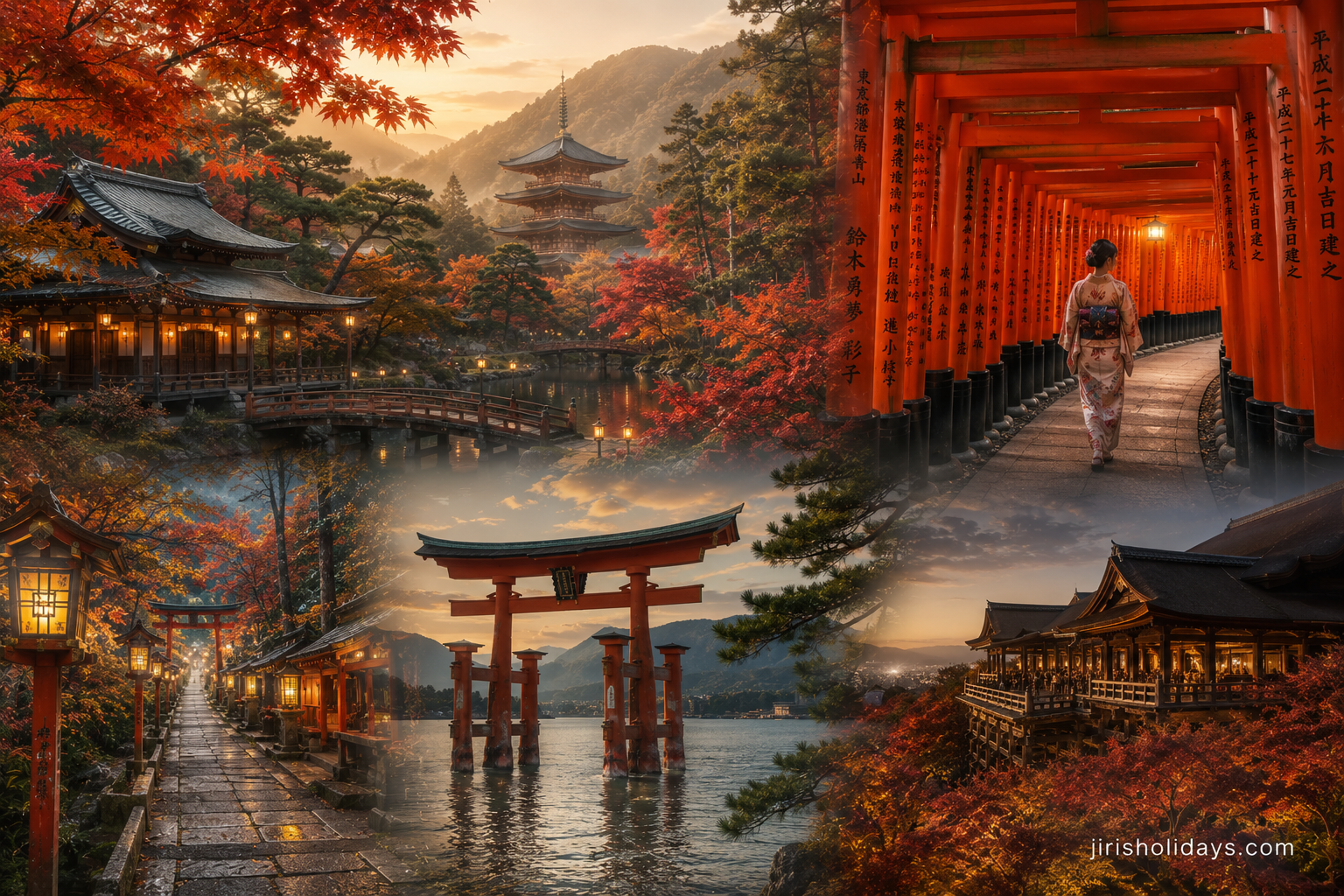
The best temples in Japan reward slow movement. A wooden corridor creaks under your feet, incense drifts across a courtyard, and a priest's bell marks the hour in a way that no phone notification can copy. Temples here are not frozen monuments—they are active places of prayer, festival, and community life. That difference matters when you plan your route: some sites open before dawn for morning chanting, while others close early and expect silence after sunset. Geography shapes the list as much as fame. Kyoto alone holds more than 1,600 Buddhist temples, yet Nara, Kamakura, Nikko, and Tokyo each contribute landmarks that belong on any serious temple tour. This article groups the finest examples by region and character so you can match mood with location—mountain shrines with endless torii gates, gilded halls beside reflective ponds, or austere Zen gardens where raked gravel does the talking. We also cover practical basics: dress codes, photography limits, admission fees, and how temple visits fit alongside shrines, which follow Shinto tradition and different customs. Read through the full list, then use the comparison table and sample itinerary to build days that feel unhurried rather than rushed.
Top Destinations Worth Your Time
Fushimi Inari Taisha, Kyoto
Fushimi Inari Taisha is among the most photographed religious sites in Japan, yet it still feels intense when you climb through thousands of vermillion torii gates that tunnel up Mount Inari. Dedicated to Inari, the kami associated with rice and prosperity, the shrine predates Kyoto's capital status and remains the head shrine for more than 30,000 Inari sites nationwide. The lower precincts bustle from early morning, but many visitors turn back after the first viewpoint, leaving quieter upper trails for those willing to walk ninety minutes to the summit.
Fox statues—Inari's messengers—guard sub-shrines along the path, and small stone offerings dot mossy clearings where local businesses sponsor gate sections. Autumn foliage frames the corridors in November, while summer mornings offer shade and fewer tour groups if you arrive before 8 a.m. The shrine has no admission fee, which makes it easy to combine with southern Kyoto temples on the same day.
Highlights:
- Thousands of torii gates along forested mountain trails
- Free admission and 24-hour access to main paths
- Fox messenger statues and subsidiary shrines
- Panoramic views over Kyoto from Yotsutsuji intersection
Practical note: Take JR Nara Line to Inari Station, two stops from Kyoto Station; wear comfortable shoes for uphill walking.
Kinkaku-ji (Golden Pavilion), Kyoto
Kinkaku-ji, the Golden Pavilion, rises beside a mirror pond in northern Kyoto, its top two floors coated in gold leaf that catches morning light with almost unreal brightness. Originally a retirement villa for shogun Ashikaga Yoshimitsu in the 1390s, the current structure dates to 1955 after fire destroyed earlier buildings—yet the rebuilt pavilion faithfully follows Muromachi design. The stroll garden uses borrowed scenery from surrounding hills, and each viewing angle reveals a different reflection in the water.
Crowds peak between 10 a.m. and 2 p.m., so tickets at opening or late afternoon improve the experience. Photography is allowed from designated paths only; interior access is not offered. Pair Kinkaku-ji with Ryoan-ji's rock garden, a short bus ride west, for a half-day of northern Kyoto highlights.
Highlights:
- Gold-leaf pavilion reflected in Kyoko-chi pond
- UNESCO World Heritage site within stroll garden
- Muromachi-period architecture and landscaping
- Seasonal views including snow-capped roofs in winter
Practical note: City bus 101 or 205 from Kyoto Station; admission around 500 yen; allow 45–60 minutes on site.
Kiyomizu-dera, Kyoto
Kiyomizu-dera stands on Otowa Mountain, its wooden stage jutting thirteen meters above the hillside and supported by massive pillars without a single nail in the traditional joinery. Founded in 778, the temple belongs to the Hosso school of Buddhism and draws millions yearly for cherry blossoms, autumn maples, and views across eastern Kyoto. The Otowa Waterfall below grants three streams said to bring longevity, success, or love—choose one cup only, as drinking from all three is considered greedy.
Ninen-zaka and Sannen-zaka lanes leading to the gate preserve Edo-period shopfronts selling ceramics, pickles, and soft-serve matcha. Evening illuminations run during spring and autumn special periods. The main hall is undergoing periodic restoration work through the decade, so check official updates before booking photography-focused trips.
Highlights:
- Famous wooden stage with city and forest views
- Otowa Waterfall purification ritual
- Historic merchant lanes Ninen-zaka and Sannen-zaka
- Seasonal night illuminations in spring and autumn
Practical note: Bus 100 or 206 to Gojo-zaka or Kiyomizu-michi; steep uphill walk from bus stop; admission about 400 yen.
Ryoan-ji, Kyoto
Ryoan-ji houses Japan's most famous karesansui, or dry landscape garden: fifteen stones arranged in moss islands on raked white gravel, positioned so at least one stone hides from every viewing angle on the veranda. Scholars still debate whether the design represents islands in sea, tiger cubs crossing water, or abstract Zen teaching—and that ambiguity is part of the appeal. The temple was converted from a Fujiwara clan estate in 1450 and later affiliated with Myoshin-ji Zen lineage.
Arrive at opening for a chance to sit quietly before tour groups fill the veranda. The surrounding pond garden, Kyoyochi, allows leisurely walking year-round and sees fewer visitors than the rock garden. Combined tickets with nearby temples are not sold, but city buses link Ryoan-ji with Kinkaku-ji efficiently.
Highlights:
- Iconic fifteen-stone Zen rock garden
- Quiet veranda viewing experience
- Kyoyochi pond garden with walking path
- UNESCO World Heritage recognition
Practical note: Bus 59 from Sanjo-Keihan or 50 from Kyoto Station; admission about 500 yen; best visited early morning.
Todai-ji, Nara
Todai-ji's Daibutsuden hall in Nara Park ranks among the largest wooden buildings on earth, sheltering a bronze Great Buddha more than fifteen meters tall cast in the eighth century. Emperor Shomu commissioned the project to unify the country through Buddhism, and the scale still communicates political ambition as much as devotion. Free-roaming deer, considered messengers of the gods, approach visitors along the approach path—crackers sold nearby attract attention quickly.
The pillar hole at the base of a column—said to match the Buddha's nostril—draws queues of visitors attempting to crawl through for enlightenment blessings. Nara makes an easy day trip from Kyoto or Osaka by JR or Kintetsu rail. Allow two to three hours for Todai-ji, Nigatsu-do hall, and park strolls combined.
Highlights:
- Massive bronze Daibutsu (Great Buddha) statue
- Historic Daibutsuden wooden hall
- Nara Park deer and wide lawns
- Nigatsu-do hall with elevated city views
Practical note: JR Nara or Kintetsu Nara Station, then 20-minute walk or bus to Daibutsuden; hall admission about 600 yen.
Senso-ji, Tokyo
Senso-ji in Asakusa anchors Tokyo's oldest temple tradition, with legend tracing its founding to 628 when fishermen pulled a Kannon statue from the Sumida River. The Kaminarimon thunder gate and Nakamise shopping street—selling senbei crackers, folding fans, and ningyo-yaki cakes—create a festival atmosphere rare among solemn rural temples. The main hall and five-story pagoda were rebuilt after wartime bombing and remain symbols of the city's resilience.
Visit at dawn when the main hall opens for a calmer experience, or return after dark when lanterns glow along the arcade. Sumida River cruises and Tokyo Skytree sit within walking distance, making Asakusa a full-day neighborhood rather than a quick photo stop. New Year draws millions for hatsumode first prayers—avoid January 1–3 unless you enjoy dense crowds.
Highlights:
- Kaminarimon Gate with giant red lantern
- Nakamise-dori traditional shopping street
- Five-story pagoda and main Kannon hall
- Proximity to Sumida River and Tokyo Skytree
Practical note: Asakusa Station on Ginza and Asakusa lines; free entry to grounds; main hall open roughly 6 a.m.–5 p.m.
Engaku-ji, Kamakura
Engaku-ji belongs to the Rinzai Zen school and sits minutes from Kita-Kamakura Station on the JR Yokosuka Line, making it one of the easiest serious temple visits from Tokyo. Founded in 1282 to pray for souls lost during Mongol invasions, the complex cascades up a wooded slope with eighteen sub-temples, of which several open to the public. The Shariden hall, which once housed a tooth relic of the Buddha, exemplifies Song-dynasty Chinese influence on Kamakura architecture.
Autumn maples draw photographers in November, while June hydrangeas bloom along paths near neighboring temples on the Kamakura hiking trail. The temple bell, a national treasure, stands among Japan's largest bronze bells. Combine Engaku-ji with Meigetsu-in or Kencho-ji for a contemplative day away from Tokyo's pace.
Highlights:
- Rinzai Zen temple complex in forested hills
- National treasure temple bell
- Shariden hall Song-style architecture
- Easy rail access from Tokyo
Practical note: JR Kita-Kamakura Station, one minute walk; admission about 500 yen; walking shoes recommended for slopes.
Toshogu Shrine, Nikko
Toshogu honors Tokugawa Ieyasu, founder of the shogunate that ruled Japan for 250 years, and blurs the line between shrine and temple with lavish Buddhist-Shinto syncretism. Yomeimon gate carries thousands of carvings—including the famous sleeping cat and three wise monkeys—gilded in gold leaf and vivid paint unlike the restrained aesthetics of Kyoto Zen sites. The complex climbs through cedar forest at more than 600 meters elevation, offering cooler summers than lowland cities.
Repair scaffolding rotates among buildings, so check which halls are fully visible before travel. Lake Chuzenji and Kegon Falls lie higher in Nikko National Park and suit a two-day itinerary from Tokyo. Winter snow transforms the carved facades into sharp contrasts of white and vermillion.
Highlights:
- Yomeimon gate with intricate carvings
- Three wise monkeys and sleeping cat motifs
- Tokugawa Ieyasu mausoleum in cedar forest
- Gateway to Nikko National Park
Practical note: Tobu or JR Nikko from Tokyo, then bus to shrine; combined admission tickets available; allow 2–3 hours.
Horyu-ji, Nara Prefecture
Horyu-ji preserves some of the world's oldest wooden structures, with the central gate and main hall dating to the late sixth or early seventh century depending on scholarly interpretation. Prince Shotoku's patronage linked the temple to early state Buddhism and continental trade via the Korean peninsula. The layout separates inner and outer compounds, letting visitors trace how Japanese temple planning evolved from continental models toward local forms.
Fewer crowds reach Horyu-ji compared with Nara Park, though the site sits only thirty minutes by bus from JR Horyuji Station. The adjacent Chugu-ji convent houses a celebrated Miroku Bosatsu statue, often compared with the Mona Lisa for subtle smile and drapery carving. Serious art history travelers should allocate half a day.
Highlights:
- Among oldest surviving wooden buildings globally
- Prince Shotoku historical association
- National Treasure pagoda and main hall
- Quieter alternative to central Nara crowds
Practical note: JR Horyuji Station, bus or 20-minute walk; admission about 1,500 yen for main areas; closed some weekdays.
Byodo-in, Uji
Byodo-in's Phoenix Hall appears on the ten-yen coin—a symmetrical building reflected in front pond that embodies Pure Land Buddhist paradise imagery from 1053. Uji lies between Kyoto and Nara on the JR Nara Line, famous also for matcha tea cultivation and riverside scenery. The museum beside the garden displays original temple bells and phoenix roof ornaments replaced with replicas atop the hall.
Interior tours of the Phoenix Hall require separate timed tickets with limited daily slots. Uji makes a rewarding half-day when Kyoto feels crowded, especially during early May before summer heat. Pair temple viewing with tea ceremony experiences at local houses along the Uji River.
Highlights:
- Phoenix Hall featured on Japanese currency
- Pure Land Buddhist architecture and pond garden
- Original UNESCO-listed Heian-period design
- Uji matcha tea culture nearby
Practical note: JR Uji Station, 10-minute walk; garden admission about 600 yen; Phoenix Hall interior extra fee and timed entry.
Zenko-ji, Nagano
Zenko-ji predates sectarian divisions in Japanese Buddhism and welcomes all traditions beneath its main hall, which shelters a hidden golden image said to have arrived from Korea in 552. Pilgrims have walked the Sanada pilgrimage route for centuries, and the temple's morning ritual—public viewing of the image once every seven years in replica form—anchors city life in Nagano. The dark tunnel beneath the altar lets visitors grope for the key to paradise attached to a wall, symbolizing blind faith.
Nagano hosted the 1998 Winter Olympics, and ski resorts of Hakuba lie within day-trip range, making Zenko-ji a cultural counterpoint to alpine sports vacations. The approach street, Nakamise-dori, offers oyaki dumplings and local sake. Winter snow festivals add lanterns along the precinct.
Highlights:
- Non-sectarian Buddhist temple open to all schools
- Underground tunnel pilgrimage experience
- Historic Nakamise approach street
- Base for Japanese Alps and ski trips
Practical note: Nagano Station, bus or 15-minute walk to temple; main hall admission about 500 yen; tunnel access included.
Quick Comparison: Where to Go First
Use this table to match your travel style with the right stop on your route. Priorities differ—some travelers want beaches, others want cities or mountain air.
| Destination | Best For | Typical Stay | Peak Season |
|---|---|---|---|
| Fushimi Inari | Photography and hiking | 2–3 hours | March–May, Oct–Nov |
| Kinkaku-ji | Iconic architecture | 1 hour | Early morning year-round |
| Kiyomizu-dera | City views and seasons | 1.5 hours | Cherry blossom, autumn |
| Todai-ji | Scale and history | 2 hours | Weekdays in spring |
| Senso-ji | Urban culture | 1–2 hours | Dawn or evening |
| Ryoan-ji | Zen contemplation | 1 hour | Opening time |
| Toshogu | Ornate craftsmanship | 2–3 hours | May, October |
| Horyu-ji | Ancient wooden architecture | 2 hours | Weekday mornings |
Suggested Itinerary Ideas
This seven-day route links Tokyo, Kamakura, Nikko, Kyoto, Nara, and Uji without excessive backtracking. Adjust rail passes based on whether you fly into Haneda or Kansai.
- Day 1 – Tokyo Asakusa: Morning at Senso-ji, Nakamise shopping, afternoon Sumida cruise and Skytree for contrast between old and new Tokyo.
- Day 2 – Kamakura: JR to Kita-Kamakura: Engaku-ji, Meigetsu-in, Daibutsu bronze Buddha, return via Enoshima if time allows.
- Day 3 – Nikko: Early train to Toshogu, explore cedar avenue and storehouses, optional Lake Chuzenji extension overnight.
- Day 4 – Kyoto east: Kiyomizu-dera at opening, walk Higashiyama lanes, afternoon Fushimi Inari for sunset gates.
- Day 5 – Kyoto north: Kinkaku-ji dawn visit, Ryoan-ji rock garden, optional Daitoku-ji sub-temples.
- Day 6 – Nara: Todai-ji Great Buddha, Nara Park deer, Kasuga Taisha lanterns, Nigatsu-do views.
- Day 7 – Uji and depart: Byodo-in Phoenix Hall timed tour, matcha tasting, JR onward to Osaka or Kansai Airport.
Planning Tips Before You Book
Temple travel in Japan runs smoother when you respect local rhythm. Many sites open around sunrise and close by late afternoon, so stacking three major temples in one afternoon often fails. Purchase regional IC cards for buses in Kyoto, where subway coverage is thin compared with Tokyo. Cash still matters at smaller ticket booths, though major temples now accept cards. Wear shoes you can slip off if interiors allow entry—socks without holes are worth packing. Photography rules vary: courtyard shots may be fine while inner halls forbid flashes or all cameras. Festival calendars can close usual paths or add evening illuminations worth planning around. Consider early November for fall color or late March for cherry blossoms tied to temple grounds.
- Book Kyoto hotels near bus routes; subway does not reach many temple districts.
- Arrive at popular sites within thirty minutes of opening to avoid tour-bus peaks.
- Combine rail passes with single tickets—Japan Rail Pass does not cover all private lines in Kyoto.
- Download offline maps; English signage is good but alleyway exits confuse first-time visitors.
- Carry a light scarf or shawl for shoulder coverage when entering main halls.
- Check restoration schedules for Kiyomizu-dera and Toshogu before finalizing photography plans.
- Reserve Phoenix Hall interior slots at Byodo-in online during peak seasons.
- Keep voices low and step aside for worshippers—not every visitor is a tourist.
Final Thoughts on Best Temples in Japan
The best temples in Japan offer more than postcard views. They record centuries of craft, politics, and faith in timber joints, bronze castings, and raked gravel lines. Build your trip around a mix of famous icons and quieter compounds like Horyu-ji or Engaku-ji, and you will feel the range of Japanese religious art without burning out on queues. Give each site time to breathe—one fully absorbed morning beats three rushed afternoons. Consider purchasing a goshuincho stamp book at your first temple; collecting handwritten seals becomes a personal travel diary more meaningful than mass-produced souvenirs. Return in a different season if possible—snow on Kinkaku-ji and maple fire at Tofuku-ji rewrite familiar scenes entirely. When you return home, the smell of incense on your clothes will outlast any gift-shop trinket.
 jirisholidays@facebook
 jirisholidays@instagram