
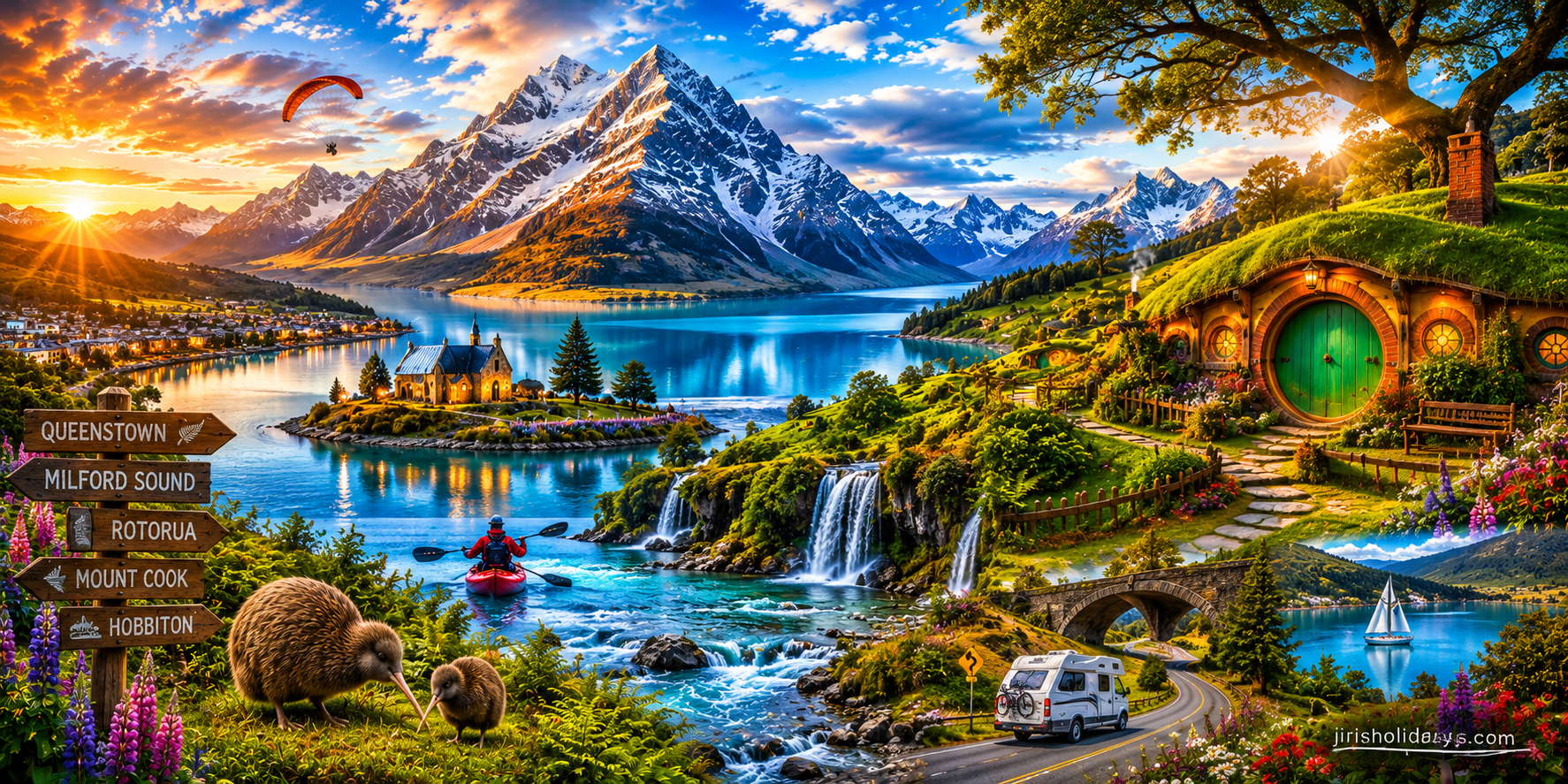
The best places to visit in New Zealand reward travelers who slow down and match regions to their interests. The South Island leans toward dramatic mountains, turquoise lakes and long-distance hikes, while the North Island mixes geothermal activity, M?ori heritage and accessible beaches. Most international visitors fly into Auckland or Christchurch and rent a car or campervan, because train and bus links exist but do not reach every highlight. Distances look short on a map yet mountain roads and ferry crossings add time, so a two-week trip usually means choosing either deep South Island exploration or a balanced north–south loop rather than trying to see everything. Peak summer from December to February brings long daylight and busy campgrounds; shoulder seasons in spring and autumn offer quieter trails and stable weather in many regions. This guide ranks the stops that consistently deliver scenery, culture and practical access, with notes on how long to stay and what to book ahead. Driving etiquette matters on narrow South Island highways where campervans and tourists share blind corners—pull into bays to let faster traffic pass. DOC manages most Great Walks with hut lotteries opening months ahead for peak summer. Rental companies restrict gravel roads on some insurance policies, so confirm whether Milford Road and Skippers Canyon are covered. M?ori cultural experiences range from commercial dinners to marae visits requiring formal introduction; choose operators that employ local guides and explain protocols clearly. Wine regions in Marlborough and Central Otago pair with cycling trails if you want rest days without skipping scenery. Independent cafes and family-run guesthouses often provide the most current road and ferry advice, especially where mobile signal drops on mountain or coastal routes. Markets open early—morning visits beat heat and tour-bus parking congestion at popular viewpoints. If you travel during local festivals, book accommodation farther in advance and expect higher prices, but also richer cultural context worth the planning effort.
Top Destinations Worth Your Time
Queenstown
Queenstown sits on Lake Wakatipu with the Remarkables range as a backdrop, and it functions as New Zealand adventure capital for good reason. Bungy jumping started here, and you can still book jet boat rides on the Shotover River, paragliding above the lake, or ski days at Coronet Peak and The Remarkables in winter. The town itself is compact, walkable and heavy on restaurants, with a lakeside path that stays busy from morning coffee through sunset.
Beyond adrenaline, Queenstown works as a base for day trips to Glenorchy, Arrowtown gold-mining streets, and the Central Otago wine sub-regions around Gibbston. Book accommodation early for Christmas–New Year and ski holidays. Parking in town fills quickly, so staying within walking distance of central shops saves hassle.
Winter ski shuttles run from town to Coronet Peak and Remarkables with gear rental at hill bases. Summer luge and gondola combo tickets at Skyline reduce queue time if booked online. Local buses connect airport and Frankton retail park if you skip renting a car for a short stay.
Evening light often beats midday for photos and shorter queues at ticket windows. Weekday mornings typically see fewer domestic tour groups than Saturday afternoons at popular viewpoints. Ask accommodation staff about road works or festival detours that mapping apps miss in rural areas.
Highlights:
- Lake Wakatipu waterfront
- Shotover Jet and canyon experiences
- Skyline Gondola and luge
- Nearby ski fields in winter
- Gibbston Valley wineries
Practical note: Allow three to four nights if you want both adventure activities and a relaxed lake day.
Milford Sound
Milford Sound in Fiordland National Park is a steep-walled inlet fed by waterfalls that strengthen after rain, and it remains the country most photographed natural icon. Most visitors reach it on a day trip from Queenstown or Te Anau via the Milford Road, a scenic drive through Homer Tunnel with avalanche controls in winter. Cruise operators run two-hour trips past Mitre Peak, seal colonies and Stirling Falls.
Overnight options include staying in Milford Sound itself at limited lodges or basing in Te Anau to break up the drive. Flights from Queenstown offer an aerial perspective on days when cloud sits low on the road. Book cruises in peak season because midday departures sell out.
Rain actually enhances Milford because hundreds of temporary waterfalls appear on cliff faces—waterproof layers beat canceling on wet forecasts. Kayak tours launch from the terminal for quieter water-level views of seals. Helicopter flights from Queenstown land on glaciers when weather permits a splurge day.
Evening light often beats midday for photos and shorter queues at ticket windows. Weekday mornings typically see fewer domestic tour groups than Saturday afternoons at popular viewpoints. Ask accommodation staff about road works or festival detours that mapping apps miss in rural areas.
Highlights:
- Mitre Peak views
- Rainforest and waterfall cruises
- Milford Road scenic drive
- Seal and dolphin sightings
- Optional kayak add-ons
Practical note: Start drives from Te Anau before dawn in summer to secure parking at the terminal.
Rotorua
Rotorua on the North Island smells of sulfur near geothermal parks, and that distinct scent signals bubbling mud pools, geysers and steaming valleys within minutes of town. Te Puia and Wai-O-Tapu showcase colored terraces and P?hutu Geyser eruptions, while Whakarewarewa Living M?ori Village explains how communities lived alongside thermal features for generations.
Lake Rotorua and the Redwoods Whakarewarewa Forest add mountain biking and walking trails beyond the geothermal circuit. Polynesian Spa offers lake-view hot pools after a day outdoors. Rotorua pairs well with Taup? and Hobbiton for a compact North Island loop.
Whakarewarewa forest mountain bike trails range from beginner loops to technical descents with rental shops in town. Lake Rotomahana boat tours explain the 1886 Tarawera eruption that destroyed the Pink and White Terraces. Evening hangi meals pair earth-oven lamb with M?ori performance at several licensed venues.
Evening light often beats midday for photos and shorter queues at ticket windows. Weekday mornings typically see fewer domestic tour groups than Saturday afternoons at popular viewpoints. Ask accommodation staff about road works or festival detours that mapping apps miss in rural areas.
Highlights:
- P?hutu Geyser at Te Puia
- Wai-O-Tapu thermal colors
- M?ori cultural performances
- Redwoods forest trails
- Polynesian Spa hot pools
Practical note: Two nights covers major geothermal sites plus one forest or lake activity.
Abel Tasman National Park
Abel Tasman National Park at the top of the South Island combines golden sand beaches with coastal forest trails linked by water taxis. The Abel Tasman Coast Track is one of New Zealand Great Walks, but you do not need a multi-day hike to enjoy it—many travelers take a half-day kayak or a water taxi drop to Medlands Beach or Bark Bay.
Tide timing matters for crossing estuaries on foot, and operators publish schedules that align with low water. Marahau and Kaiteriteri serve as launch points with cafes and gear rental. The region stays milder than alpine South Island areas, making it a strong summer beach stop.
Awaroa Beach gained fame through a crowdfunding campaign to buy private land for public access—still a photogenic stop on water taxi routes. Sea kayaking tours include guide briefings on tidal crossings at Onetahuti estuary. Park campsites book through DOC for multi-day hikers carrying food and cooking gear.
Evening light often beats midday for photos and shorter queues at ticket windows. Weekday mornings typically see fewer domestic tour groups than Saturday afternoons at popular viewpoints. Ask accommodation staff about road works or festival detours that mapping apps miss in rural areas.
Highlights:
- Coastal kayaking routes
- Golden sand coves
- Abel Tasman Coast Track sections
- Water taxi flexibility
- Split Apple Rock viewpoint
Practical note: Base in Motueka or Kaiteriteri and book water taxis a day ahead in January.
Wanaka
Wanaka trades Queenstown crowds for a calmer lake town backed by snow peaks and easy access to Mount Aspiring National Park. That Wanaka Tree—a lone willow in the lake—draws photographers, but the real appeal is hiking Roys Peak track for panoramic views or driving to Blue Pools on the Haast Pass road.
Puzzling World adds a family-friendly stop, while ski fields Cardrona and Treble Cone sit within a short drive in winter. Wanaka works as a quieter alternative base for Milford Sound day trips from Te Anau as well.
Warbirds and Wheels museum displays vintage aircraft for rainy-day alternatives. Puzzling World optical illusions entertain children while parents enjoy cafe breaks. Autumn color around the lake peaks in April when tourist numbers drop after Easter holidays.
Evening light often beats midday for photos and shorter queues at ticket windows. Weekday mornings typically see fewer domestic tour groups than Saturday afternoons at popular viewpoints. Ask accommodation staff about road works or festival detours that mapping apps miss in rural areas.
Highlights:
- Roys Peak day hike
- Lake Wanaka waterfront
- Blue Pools short walk
- Cardrona and Treble Cone skiing
- Mount Aspiring day trips
Practical note: Stay two nights to hike Roys Peak at sunrise without rushing from Queenstown.
Bay of Islands
The Bay of Islands north of Auckland scatters more than 140 islands across warm northern waters where dolphins and sailing trips are everyday tourism. Paihia is the main hub for cruises to the Hole in the Rock at Motuk?kako and for ferries to Russell, a historic town with New Zealand oldest licensed pub.
Waitangi Treaty Grounds explain the 1840 agreement between the British Crown and M?ori chiefs, with carved meeting houses and harbor views. Kerikeri offers farmers markets and the Stone Store, while Cape Reinga at the far north makes a long but memorable day trip.
Russell ferries run regularly from Paihia with car-free wandering once you arrive. Deep-sea fishing charters depart Paihia wharf for snapper and kingfish seasons. Urupukapuka Island walks combine archaeology sites with picnic beaches on Outer Bay cruises.
Evening light often beats midday for photos and shorter queues at ticket windows. Weekday mornings typically see fewer domestic tour groups than Saturday afternoons at popular viewpoints. Ask accommodation staff about road works or festival detours that mapping apps miss in rural areas.
Highlights:
- Hole in the Rock cruises
- Waitangi Treaty Grounds
- Russell historic waterfront
- Dolphin watching seasons
- Cape Reinga day tours
Practical note: Plan two to three nights; summer dolphin tours book quickly.
Fiordland and Te Anau
Te Anau is the gateway town to Fiordland National Park, sitting on New Zealand second-largest lake with views toward the Kepler and Milford tracks. The Te Anau Glowworm Caves require a boat across the lake and a short underground walk to see bioluminescent insects on the ceiling.
Doubtful Sound offers a quieter fjord experience than Milford, often combined with a cruise across Lake Manapouri. Te Anau makes sense as an overnight stop to avoid a twelve-hour Queenstown–Milford round trip in one day.
Lake2Lake cycling trail follows Te Anau shoreline for flat family rides. Real Journeys operates Doubtful Sound overnight boats with private cabins and chef meals. Milford Track hikers must book hut spaces in the annual DOC lottery for peak summer.
Evening light often beats midday for photos and shorter queues at ticket windows. Weekday mornings typically see fewer domestic tour groups than Saturday afternoons at popular viewpoints. Ask accommodation staff about road works or festival detours that mapping apps miss in rural areas.
Highlights:
- Te Anau Glowworm Caves
- Lake Te Anau cruises
- Doubtful Sound overnight cruises
- Kepler Track day sections
- Gateway to Milford Road
Practical note: Overnight in Te Anau before and after Milford Sound drives.
Christchurch
Christchurch rebuilt creatively after the 2011 earthquakes, blending new architecture with heritage trams and the Botanic Gardens beside the Avon River. The Cardboard Cathedral and Riverside Market show how the city revived its center, while the International Antarctic Centre appeals to families curious about Scott Base operations.
Christchurch airport is the main South Island entry point for many routes, and the city pairs with Akaroa French-influenced harbor village on Banks Peninsula for a gentle coastal add-on. Banks Peninsula roads are winding, so allow a full day for the return loop.
Sumner beach suburb offers surf and cliff walks twenty minutes from center. Canterbury Museum near Botanic Gardens explains Antarctic exploration history. Re:START container mall legacy shifted but Riverside Market fills similar casual dining needs downtown.
Evening light often beats midday for photos and shorter queues at ticket windows. Weekday mornings typically see fewer domestic tour groups than Saturday afternoons at popular viewpoints. Ask accommodation staff about road works or festival detours that mapping apps miss in rural areas.
Highlights:
- Christchurch Botanic Gardens
- Heritage tram loop
- International Antarctic Centre
- Riverside Market food hall
- Day trip to Akaroa
Practical note: One to two nights works for city sights plus Akaroa or Canterbury plains wineries.
Lake Tekapo and Mount Cook
Lake Tekapo famous turquoise color comes from glacial flour suspended in the water, and the Church of the Good Shepherd frames the scene for photographers at sunrise. The town sits in a Dark Sky Reserve, so stargazing tours run on clear nights with strict outdoor lighting rules.
A ninety-minute drive leads to Aoraki Mount Cook Village beneath New Zealand tallest peak, where Hooker Valley Track crosses swing bridges to a glacier lake with icebergs. Combine both stops on a South Island interior route between Christchurch and Queenstown.
Mount John Observatory night tours run when cloud cover allows—book flexible dates. Lake Pukaki viewpoint on the drive to Mount Cook shows intense blue glacial color. Alpine salmon farm shop near Twizel sells fresh fillets for picnic lunches.
Evening light often beats midday for photos and shorter queues at ticket windows. Weekday mornings typically see fewer domestic tour groups than Saturday afternoons at popular viewpoints. Ask accommodation staff about road works or festival detours that mapping apps miss in rural areas.
Highlights:
- Church of the Good Shepherd
- Dark sky stargazing tours
- Turquoise lake color
- Hooker Valley Track
- Mount Cook alpine views
Practical note: Stay one night at Tekapo for stars and one near Mount Cook for the Hooker walk.
Hobbiton Movie Set
Near Matamata on the North Island, the Hobbiton Movie Set preserves the Shire village built for Peter Jackson Lord of the Rings and Hobbit films. Guided tours walk past hobbit holes with round doors, the Party Tree, and the Green Dragon Inn where some tickets include a drink at the end.
The set is a managed attraction on private farmland, so independent wandering is not allowed outside tour times. Pair a morning visit with an afternoon in Rotorua or drive south toward Taup? for lake activities.
Matamata town nearby supplies groceries and fuel before rural driving legs. Evening banquet tours include hobbit feast scenes inside Green Dragon for fans wanting longer visits. Combine with Waitomo glowworm caves ninety minutes south for a full North Island fantasy day.
Evening light often beats midday for photos and shorter queues at ticket windows. Weekday mornings typically see fewer domestic tour groups than Saturday afternoons at popular viewpoints. Ask accommodation staff about road works or festival detours that mapping apps miss in rural areas.
Highlights:
- Guided Shire village tour
- Green Dragon Inn visit
- Film set photography
- Party Tree and hobbit holes
- Easy North Island add-on
Practical note: Book timed entry weeks ahead during school holidays and summer weekends.
Kaikoura
Kaikoura on the east coast sits where mountains meet the Pacific, creating nutrient-rich waters that attract sperm whales year-round and migrating humpbacks in winter. Whale-watch boats use hydrophones to locate animals, and regulations keep respectful distances.
The Kaikoura Peninsula Walkway passes seal colonies that lounge on rocks below the cliff path. Local cafes serve crayfish—the town name references the delicacy—and the Coastal Pacific train once linked Picton to Christchurch for passengers who prefer not to drive.
Maori-owned whale watch companies share revenue with local iwi conservation funds. Kaikoura Peninsula seal pups appear in spring—keep distance as mothers rest nearby. Coastal Pacific train scenic carriages reopen on schedules worth checking if you prefer rail to State Highway 1.
Evening light often beats midday for photos and shorter queues at ticket windows. Weekday mornings typically see fewer domestic tour groups than Saturday afternoons at popular viewpoints. Ask accommodation staff about road works or festival detours that mapping apps miss in rural areas.
Highlights:
- Year-round whale watching
- Peninsula seal colonies
- Coastal mountain scenery
- Fresh crayfish meals
- Coastal Pacific rail option
Practical note: Schedule whale tours early; sea conditions cancel boats more often in rough weather.
North Island vs South Island: How to Choose
The North Island concentrates M?ori culture, geothermal parks and shorter driving distances between highlights like Rotorua, Hobbiton and the Bay of Islands. Auckland international airport makes it a natural entry point for many carriers. The South Island delivers higher alpine drama, Milford Sound access and longer empty highways suited to campervans. First-time visitors with ten days often fly into Auckland, cross the North Island core, then fly to Queenstown for Fiordland and alpine lakes rather than taking the interisland ferry both ways. Ferry crossings between Wellington and Picton add scenic value but consume a full day with loading time.
- North Island: culture, geysers, shorter drives
- South Island: fjords, Alps, Great Walks
- Ferry links Wellington to Picton
- Domestic flights save time between islands
Seasonal Planning for New Zealand Routes
Summer school holidays from mid-December to late January fill campgrounds and Milford parking lots—book months ahead for those windows. Autumn March to May brings golden vines in Otago and fewer hikers on popular tracks. Winter June to August suits ski trips around Queenstown and Wanaka while Northland stays milder for beach walks. Spring wildflowers appear in Mackenzie Country near Lake Tekapo, though mountain passes can still hold ice in early October.
- Book Dec–Jan early for camps and cruises
- Autumn: wine harvest and trail quiet
- Winter: ski plus Northland warmth
- Spring: wildflowers with variable alpine weather
Quick Comparison: Where to Go First
Use this table to match your travel style with the right stop on your route. Priorities differ—some travelers want beaches, others want cities or mountain air.
| Destination | Best For | Typical Stay | Peak Season |
|---|---|---|---|
| Queenstown | Adventure and lake scenery | 3–4 nights | Dec–Mar, Jul ski |
| Milford Sound | Fjord cruises and drives | 1 day + Te Anau | Nov–Apr |
| Rotorua | Geothermal and M?ori culture | 2 nights | Year-round |
| Abel Tasman | Beaches and coastal hikes | 2–3 nights | Dec–Apr |
| Wanaka | Calm lakes and hiking | 2 nights | Dec–Apr, ski Jul–Sep |
| Bay of Islands | Sailing and history | 2–3 nights | Oct–Apr |
| Lake Tekapo | Stargazing and alpine color | 1–2 nights | Clear winter nights |
| Kaikoura | Marine wildlife | 1–2 nights | Year-round whales |
Suggested Itinerary Ideas
This fourteen-day loop balances North and South Island highlights with realistic driving. Adjust ferry dates if you prefer flying between Auckland and Christchurch.
- Days 1–2: Auckland to Bay of Islands: Fly into Auckland, drive north to Paihia, take a Hole in the Rock cruise and visit Waitangi.
- Days 3–4: Rotorua and Hobbiton: Drive south via Hobbiton timed tour, then geothermal parks and a M?ori cultural evening in Rotorua.
- Days 5–6: Fly to South Island: Fly to Christchurch or Queenstown; if Christchurch, explore gardens then drive toward Kaikoura or Tekapo.
- Days 7–8: Tekapo and Mount Cook: Photograph Church of the Good Shepherd, stargaze, then walk Hooker Valley beneath Aoraki.
- Days 9–11: Queenstown and Wanaka: Base in Queenstown for an adventure day and Milford or Doubtful Sound overnight from Te Anau; add a Wanaka hike.
- Days 12–13: Abel Tasman: Drive north to Nelson region, kayak or water taxi into Abel Tasman for a beach afternoon.
- Day 14: Depart: Return rental from Nelson, Christchurch or Queenstown depending on your outbound flight.
Planning Tips Before You Book
New Zealand rewards early booking for Great Walks huts, Milford cruises and summer campervans. International visitors need an NZeTA or visa depending on nationality, and biosecurity checks at airports are strict—declare food and outdoor gear. Drive on the left, and allow extra time on alpine passes. Travel insurance that covers adventure activities is wise if you plan skiing, bungy or backcountry hikes. Operators update schedules seasonally, so confirm last-minute changes at official counters rather than third-party resellers when possible. Shoulder weeks between school holidays often deliver lower lodging rates without closing attractions. Pack a light day bag with water, sun protection and a layer for air-conditioned transport or evening breezes. Photography is welcome at most outdoor sites, but ask permission before photographing people at work, prayer or private homes. Leave buffer time on travel days so weather or traffic does not force you to skip booked experiences you prepaid online.
- Book Milford cruises early for December–February midday departures.
- Compare ferry vs fly between Wellington and Picton when linking islands.
- Pack layers—coastal sun and mountain cold can occur on the same day.
- Respect M?ori sites by following photography rules at marae and cultural venues.
- Check road status on Milford Highway and alpine passes after storms.
- Use DOC resources for hut bookings and track conditions on Great Walks.
- Fill fuel in towns before remote stretches on the West Coast and Fiordland.
Final Thoughts on Best Places to Visit in New Zealand
The best places to visit in New Zealand combine well when you group regions by island and season rather than racing the map. Queenstown and Fiordland deliver the South Island drama, Rotorua and the Bay of Islands anchor North Island culture and coast, and stops like Abel Tasman and Wanaka add balance between beach and mountain days. Give yourself buffer days for weather delays on Milford Road or whale boats in Kaikoura, and you will leave with a trip that feels complete rather than rushed. Track conditions on DOC websites after heavy rain, and respect iwi-managed areas where access rules may change. A balanced trip often pairs one alpine region, one coastal park and one cultural stop rather than ticking every name on a list. Travel insurance covering hiking and rental vehicles is worth comparing before you leave home.
 jirisholidays@facebook
 jirisholidays@instagram